Table of Contents
Walk through almost any neighborhood in Carmel, Fishers, or Westfield in late spring, and you’ll notice it. Black streaks running down vinyl siding. Green patches creeping across shaded roof sections. Driveways that look permanently gray, no matter how much it rains. Indiana’s Midwest weather brings humid summers, freeze-thaw winters, and heavy tree canopy, all creating conditions that are practically ideal for algae, mold, and exterior buildup. If you’ve been thinking about getting your home cleaned, you’ve likely come across two options: pressure washing and soft washing. They sound similar. They’re not.
Choosing the right method matters more than most homeowners realize. Use the wrong one on the wrong surface, and you can end up with cracked vinyl, stripped shingle granules, or moisture driven behind your siding walls. Here’s what you need to know before anything gets wet.
Where Pressure Washing Makes Sense
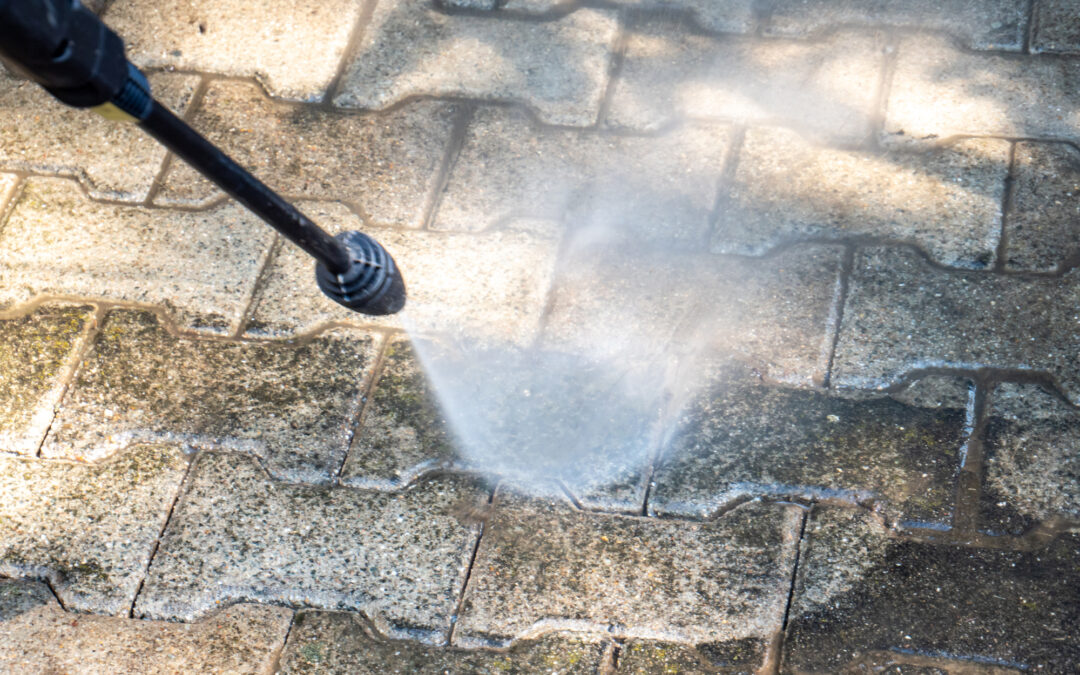
A pressure washer pushes water at 3,000 PSI or higher. That concentrated cleaning force does most of the work. No chemistry required in most cases.
It’s well-suited to hard, dense surfaces. Concrete driveways, brick exteriors, paved walkways, and pool decks can all handle that level of force without damage. Years of oil staining on a garage floor, salt residue ground into a driveway after an Indiana winter, and mud packed into pavers. A pressure washer cuts through compacted buildup that gentler methods can’t touch.
Not every surface handles that well, though. Vinyl siding, wood siding, stucco, and asphalt shingles are all vulnerable. Aggressive spray forced into the seams of vinyl panels gets behind the siding and sits against the sheathing, which is exactly how moisture problems start. On a roof, that same mechanical force strips the protective granule layer from shingles, shortening their lifespan and sometimes voiding manufacturer warranties.
Why Some Surfaces Need a Softer Approach
Here’s what a pressure washer can’t fix: algae, mold, and mildew don’t just sit on the surface of your home. They embed into it. A pressure washer removes what’s visible but leaves the underlying growth intact. Within a season or two, the streaks are back. They often return more quickly because the surface has been roughened.
Soft washing treats the problem at its source. It uses low-pressure nozzles well below 500 PSI paired with a sodium hypochlorite-based solution. Surfactants help it cling to the surface; it dwells until the growth breaks down, then it is gently rinsed away. That’s why it’s the preferred approach for exterior house and siding cleaning across vinyl, painted wood, fiber cement, and stucco, and the only method that should ever touch an asphalt shingle roof. The biodegradable solutions are safe around landscaping when properly applied and rinsed.
Results also last longer. A properly soft-washed home typically stays clean for a year or more, because the growth was killed rather than displaced.
Indiana Weather Makes This Decision More Urgent
Homeowners in drier climates don’t deal with this the same way. Indiana’s humid summers give algae, mold, and mildew exactly what they need to thrive. North- and west-facing walls, plus any surface under tree canopy, stay damp longer after rain and grow faster as a result.
By midsummer, most homes in the northside Indianapolis suburbs are showing it. Moisture builds through late fall, growth establishes on shaded surfaces over winter, and spring warmth kicks it into gear. Cleaning in early spring, before the warm season starts, keeps it from getting ahead of you.
For homes in Carmel, Fishers, Noblesville, and Westfield where mature trees are common, this is especially relevant. Shaded homes near wooded lots can see algae return in a single season if the cleaning only removes the surface layer without treating what’s underneath.
Which Method Fits Which Surface
Concrete driveways and walkways: Pressure washing is the right call. Concrete is dense enough to handle the mechanical cleaning force, and that force is often what’s needed to lift deeply embedded staining: rust marks, grease, and years of salt residue from Indiana winters. Soft washing solutions work well as a supplemental step, but they don’t replace the physical action for heavy concrete staining.
Vinyl siding: Soft washing, without question. Forcing water behind the panels risks moisture damage inside the walls, and the aggressive stream can physically crack or warp the surface. Beyond that, algae streaking and oxidation, common on Indiana siding, respond far better to chemical treatment than to water pressure.
Asphalt shingle roofs: Soft washing only. Granule loss from high-output cleaning shortens roof life and can void warranties. Roof soft washing in Indianapolis uses chemistry to kill algae and moss, then rinses it away at low pressure. Effective without causing damage.
Wood siding and decks: Low pressure with the right solution. Concentrated spray raises the grain, causes splintering, and pushes moisture deep into the material. Most professionals soft-wash wood or use carefully moderated pressure, depending on the condition and species.
Brick: Brick handles moderate pressure well, but the mortar joints are the variable. Older homes with aging mortar can see erosion from aggressive cleaning. A professional will evaluate the mortar’s condition before starting rather than treating all the bricks the same.
What Usually Goes Wrong
The most common mistake is renting a machine, cranking it up, and pointing it at siding or a roof section. Within minutes: cracked panels, stripped paint, or shingle damage in a spot that wasn’t even the original target. And the damage isn’t always immediate. Water behind vinyl can take weeks to appear as bubbling paint or moisture staining on interior walls.
Water intrusion from improper cleaning can cause mold inside wall cavities. That’s a far more expensive problem than a dirty exterior. Professional pressure washing and soft washing services bring experience that matches the method to the material, read the warning signs, and avoid turning a routine cleaning into a repair bill.
Ready to Get It Done Right?
Northside Window & Gutter Cleaning has been serving homeowners across the northside of Indianapolis, including Carmel, Fishers, Noblesville, Westfield, and the surrounding area, since 2006. We handle both pressure washing and soft washing, and we’re straightforward about which approach makes sense for each surface on your property. Fully bonded and insured, our work is backed by a 100% satisfaction guarantee.
If your home’s exterior is overdue for attention, start with a free quote. We’ll look at what you’re dealing with and tell you exactly what we’d recommend and why.
Call us at (317) 966-0212 or request your free quote online. No pressure, just honest answers.
Frequently Asked Questions
What is the main difference between pressure washing and soft washing?
The method, not the goal. Both clean your home’s exterior, but pressure washing relies on force, typically 3,000 PSI or higher, to blast away dirt. Soft washing uses low pressure, usually under 500 PSI, and lets a sodium hypochlorite-based solution do the work instead. One is built for hard surfaces like concrete and brick. The other is for anything that could be damaged by aggressive water.
Can pressure washing damage vinyl siding?
It can, yes. Forcing water behind the panels is the main concern. Once moisture gets into the wall cavity, you’re dealing with a much bigger problem than dirty siding. On top of that, the wrong angle or nozzle can directly crack or warp the panels. Soft washing cleans vinyl effectively without any of that risk.
Is soft washing safe for roofs?
Yes, and it’s the only recommended method for asphalt shingle roofs. High-output cleaning strips can granulate shingles, voiding warranties. A low-pressure rinse with the right solution removes algae without aggressively touching the surface.
How often should Indiana homeowners wash their home's exterior?
For most Indianapolis-area homes, once a year works well, and spring is usually the right time. You want to clean before Indiana’s humid summer kicks algae growth into full gear, not after. If your home sits under heavy tree cover or has north-facing walls that stay damp, you may find twice a year makes more sense.
Are the chemicals used in soft washing safe for plants and landscaping?
Generally, yes. Professional-grade solutions are biodegradable, and a trained technician will pre-wet your plant beds before applying anything and rinse them thoroughly afterward. The key word there is professional. The dilution ratios and rinsing process matter more than most people realize, which is where DIY attempts tend to go sideways.
What surfaces are best suited to pressure washing versus soft washing?
Think of it by surface density. Concrete, brick, and paved areas can handle the force of pressure washing and often need it to lift deep staining. Vinyl siding, wood, stucco, painted surfaces, and asphalt roofs are better candidates for soft washing since they’re more vulnerable to water damage and respond better to chemical treatment. Most homes actually need both, just in different spots.
How do I know which method my home needs?
Look at the surface first, then the buildup. Oil or salt stains on concrete indicate the need for pressure washing. Algae streaks or mold on the siding indicate the need for soft washing. Dark streaking on a roof is almost always algae, and that needs soft washing. If you’re not sure, a quick walk-through with one of our team members at Northside Window & Gutter Cleaning will sort it out before anything gets started.